EXTRATO
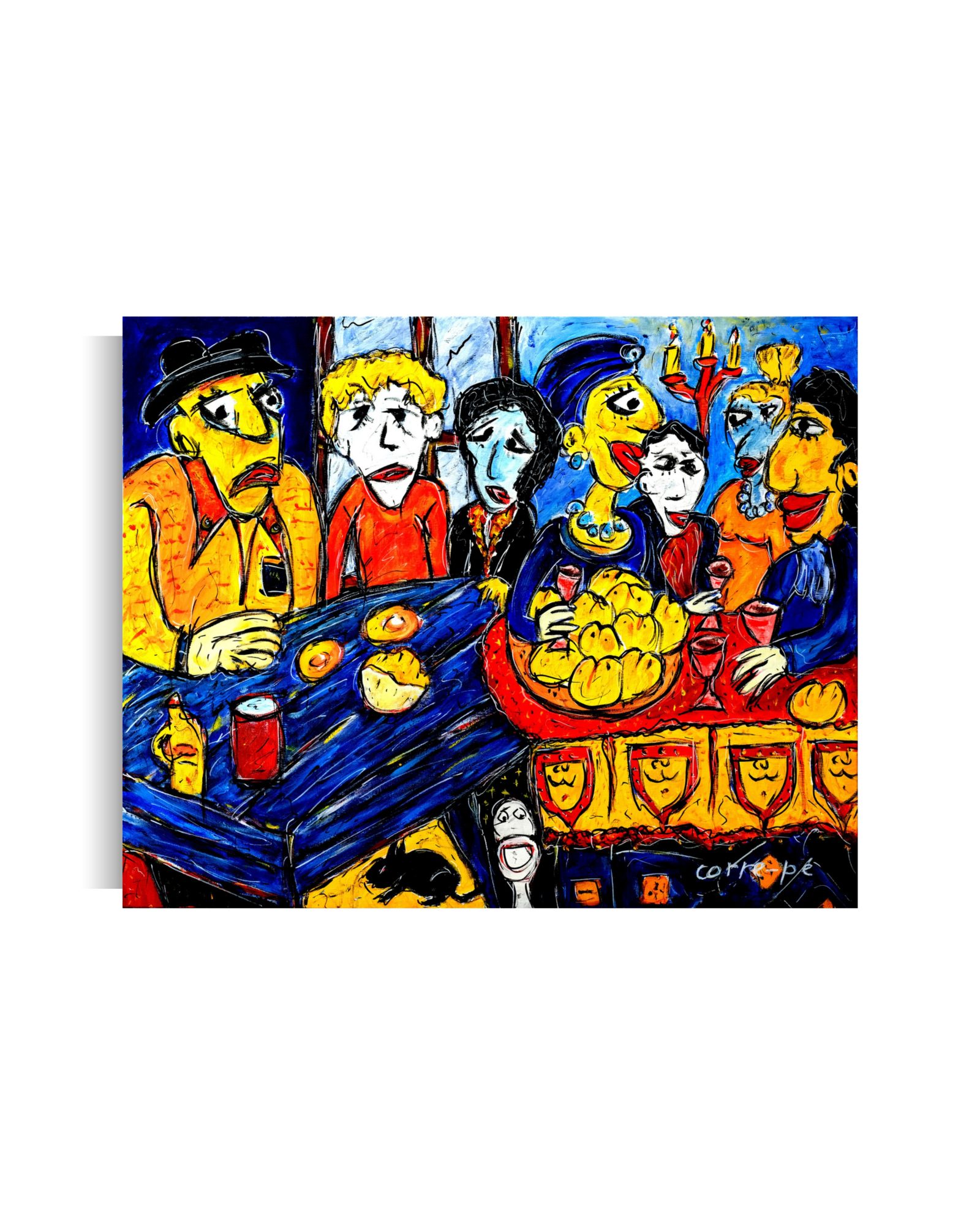
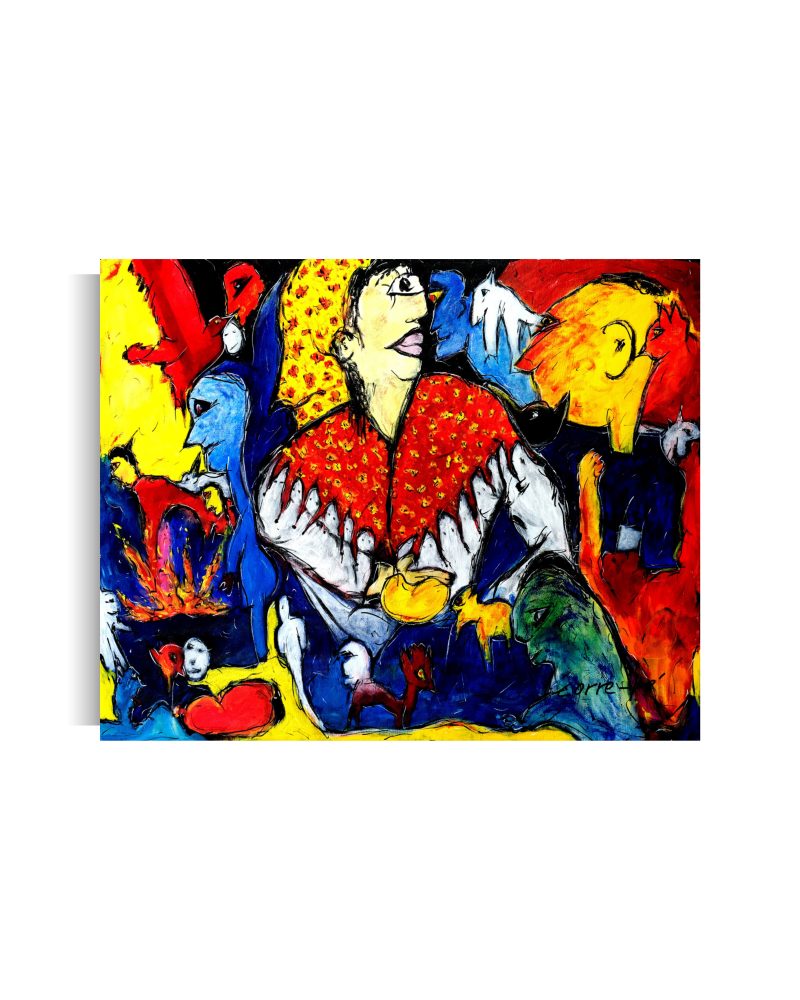
Two tables, two realities. At one, bread is scarce and a heavy atmosphere weighs on figures worn down by fatigue. At the other, bread and wine abound, the characters display their satisfaction and consumption seems to know no limits. In EXTRACT, the table reveals an inequality that goes far beyond what is being served. On one side, dark tones, deep blue and burnt orange surround a meal reduced to a piece of bread and a glass. In the background, a window lets in a cold, distant light. On the other, intense reds, yellows and blues bring a festive scene to life, dominated by abundance, wine glasses and candles. Beneath the table, empty bottles leave a trail of consumption. Between these two spaces, a figure rests one hand on each table. The gesture creates a link between realities that seem opposed but belong to the same social structure. The separation is clear, but the independence of the two sides is far less certain. The title refers to the dry extract of wine, the non volatile components that give it body and structure. Applied to the human dimension, the concept takes on another meaning: what remains once the superficial is stripped away. What sets these two tables apart is not only the amount of bread or wine, but the conditions in which each group lives and the meaning that abundance and scarcity take on for each side. With expressive figures, black outlines and distorted forms, the painting sharpens the contrast without softening its tensions. Bread and wine, associated with sharing, nourishment and celebration, become signs of a contradiction here. What can bring people together also reveals the distance between those who have little and those who consume in excess. In EXTRACT, the question is not only what lies on each table, but what this difference reveals about the society that sustains them.
- Year
- 2025
- Medium
- Acrylic on Canvas
- Dimensions
- 80 × 100 cm
- Status
- Available
We reply personally by the next working day.
Corre-Pé
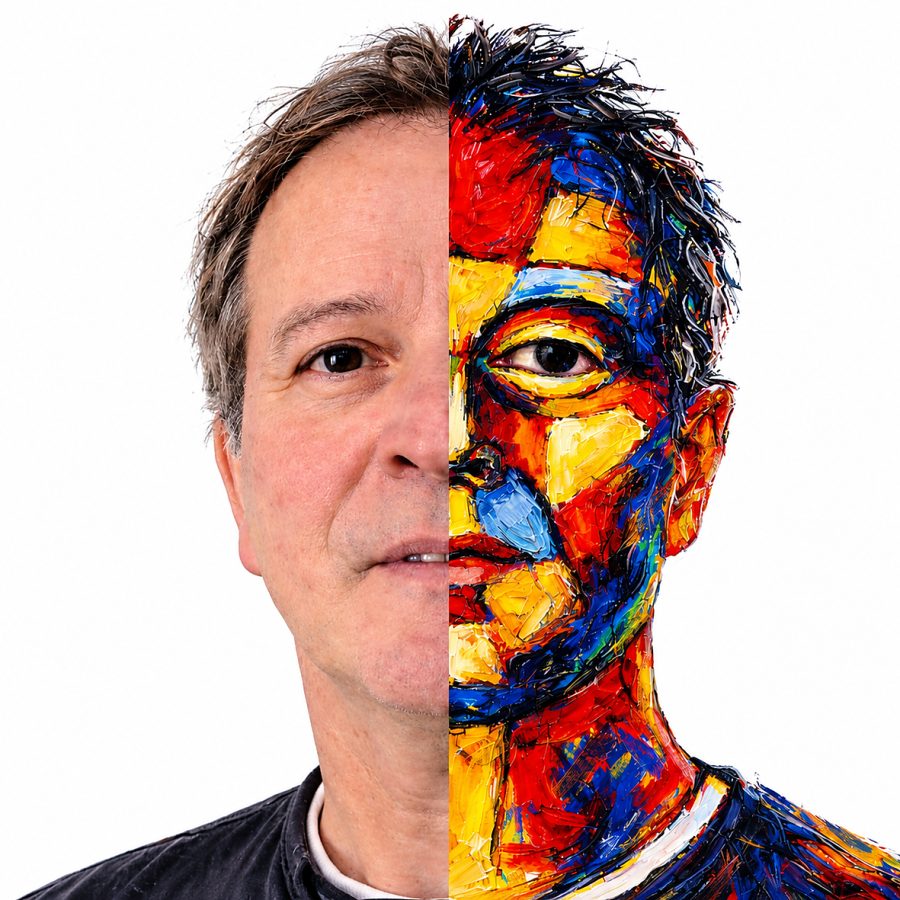
Some painters portray people. Corre-Pé paints what people carry inside. A Portuguese contemporary artist with a studio in Alhos Vedros, Corre-Pé grew up with painting close at hand from a very early age. In 2000 he decided to take it seriously, and he has never stopped questioning, researching and refining his own visual language since. Today he describes his work as Contemporary Social Art, a practice that looks at identity, collective behaviour, human relationships and what it means to be human. The human figure is at the heart of everything he does. Corre-Pé distorts it, multiplies it and wraps it in expressive lines and bold primary colours, the red, blue and yellow that have become his signature. From old taverns to fado, from the shared table to the big questions of the human condition, his canvases turn scenes of Portuguese everyday life into symbolic images full of energy, humour and unease. His process is as unique as the result. Before the paint, there are always words. Notes, memories, conversations and observations that later take shape directly on the canvas, almost without sketches, leaving room for intuition and the unexpected. His path speaks to the strength of this language. In 2026 he was recognised by The Christie’s Owners Collection and selected as a finalist for the Premio Brera in Milan with Transformation, a work inspired by Kafka’s The Metamorphosis. He was also a finalist at the III Concurso de Pintura Ciudad de Martos (2025), received an Honourable Mention at the Dama de Oro Prize (2024) and the Revelation Award at Exporádico in Alhos Vedros (2016). He has held solo exhibitions at the Museu Nacional Ferroviário, the Galeria Municipal de São Brás de Alportel, Galeria Geraldes da Silva and the Núcleo Museológico de Favaios, and has taken part in group shows in Portugal and abroad, from Lisbon to Miami. His works are held in private collections in Portugal, Switzerland and North America.