FÁBULAS DO FERNANDO PARA PESSOAS
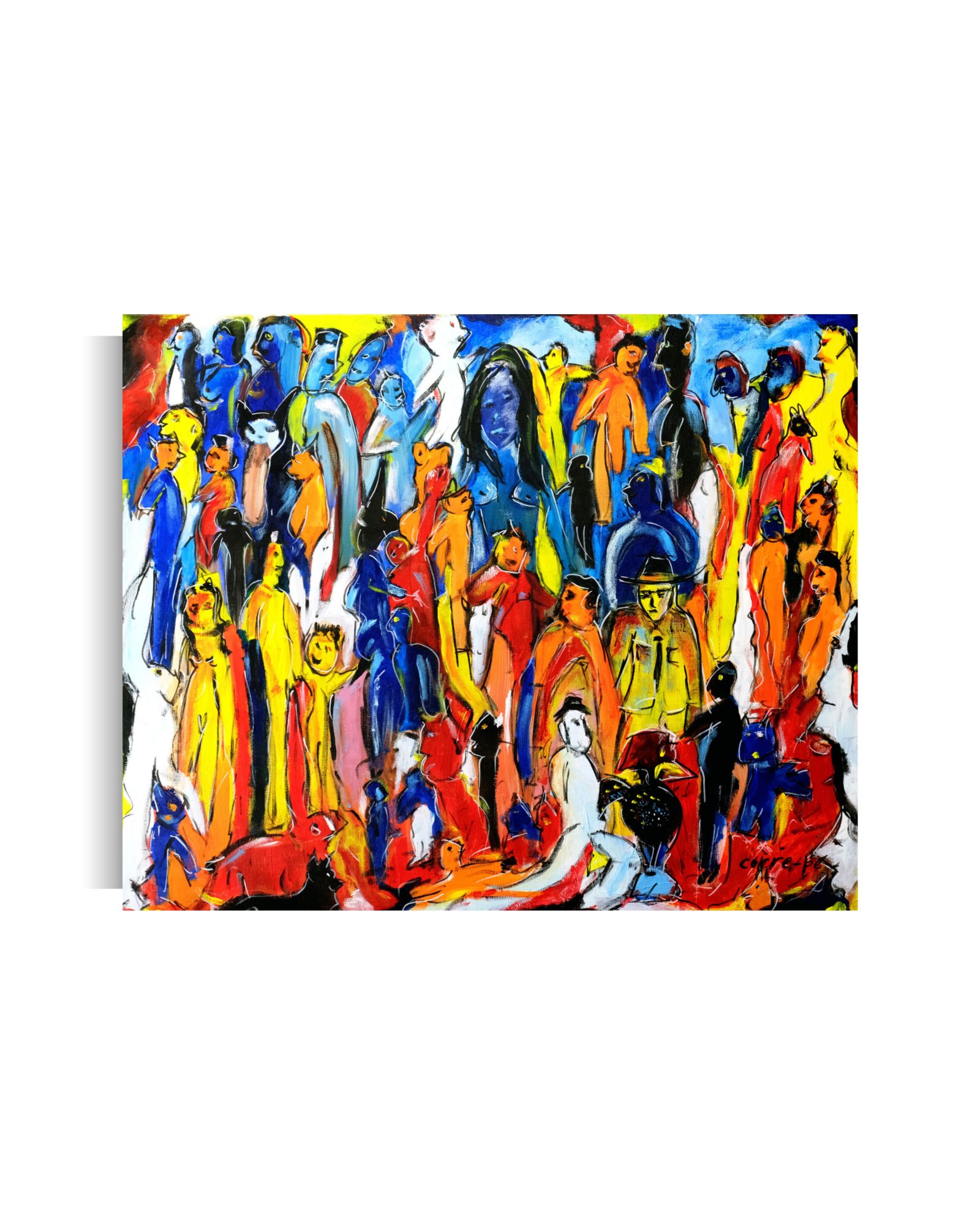
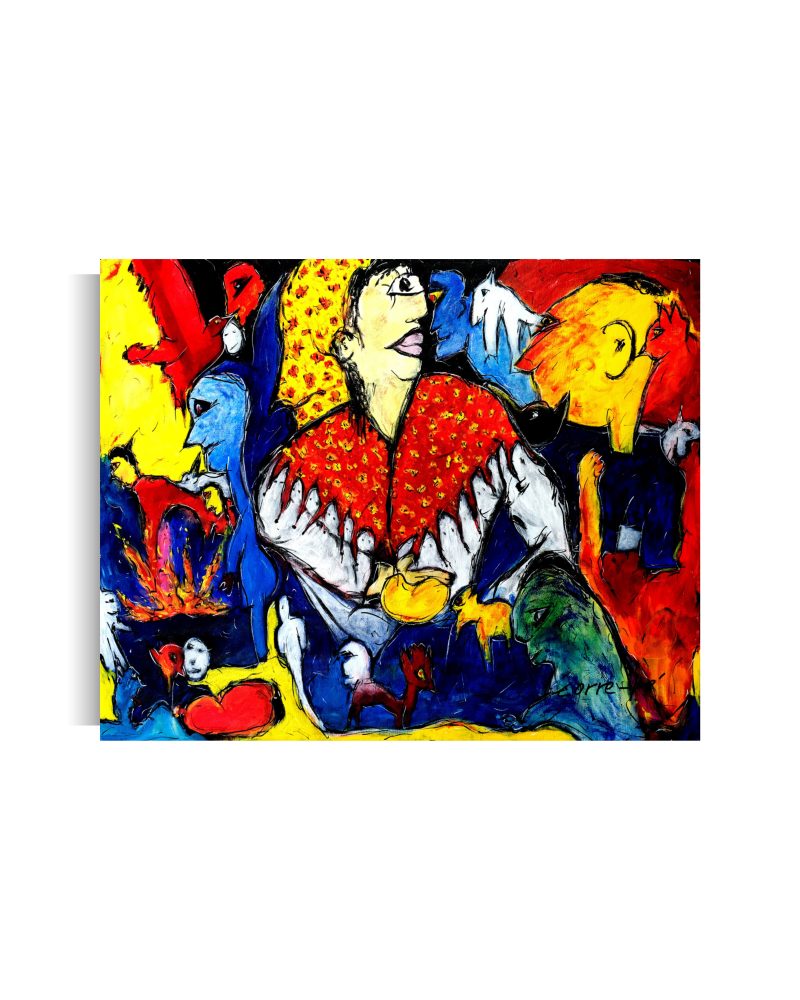
What if Fernando Pessoa had imagined a fable like this one? This painting was born from that possibility. I did not start from a story written by the poet, but from my own imagination, seeking to build a universe where people and animals coexist, cross paths and seem to take part in a narrative that is never fully revealed. The figure of Fernando Pessoa appears amid this multitude of characters, woven into a composition where the human and the animal blend together. The Rooster of Barcelos brings in a reference to Portuguese culture, while other figures, among them a woman highlighted in shades of blue and a child beside an adult, add different presences and relationships to the scene. I did not seek to illustrate an existing fable or to reconstruct the poet’s literary universe. I imagined what a fable by Fernando Pessoa might be if it passed through my own pictorial language: a gathering of figures, gestures and encounters where each character seems to carry a story, an idea or a contradiction. The primary colours, expressive outlines and density of figures give the composition a constant sense of movement. There is no linear narrative dictating a single reading. The characters coexist in a space where reality and imagination meet, leaving viewers free to draw their own connections. Part of the Origins series, this work opens a dialogue between literature, Portuguese culture and personal imagination. The title carries this double intention: it evokes Fernando Pessoa, but it also addresses these fables to people, since “pessoa” means “person” in Portuguese. Because, in the end, the stories we invent about others often reveal what we think of ourselves.
- Year
- 2024
- Medium
- Acrylic on Canvas
- Dimensions
- 80 × 100 cm
- Status
- Available
We reply personally by the next working day.
Corre-Pé
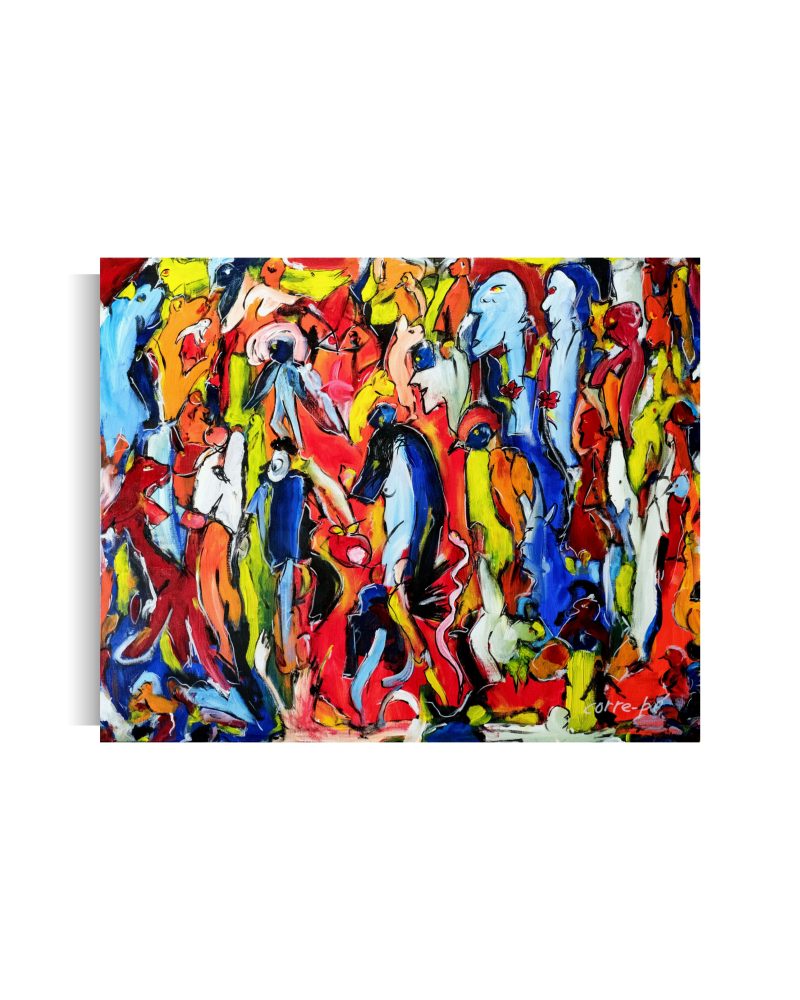
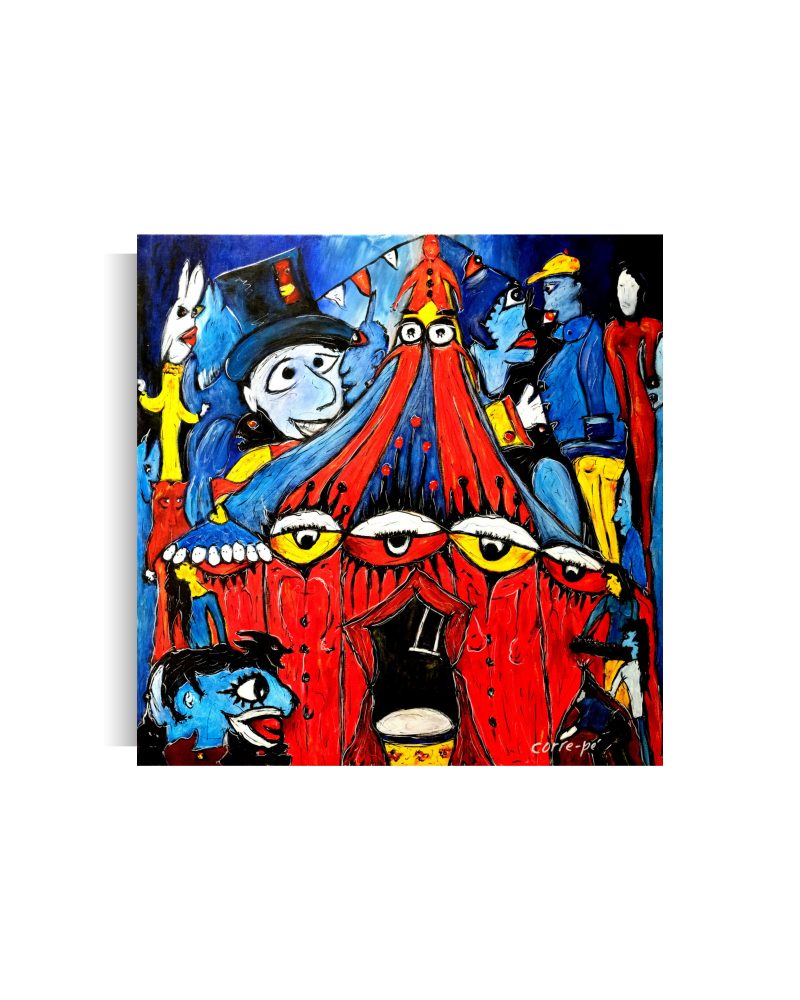
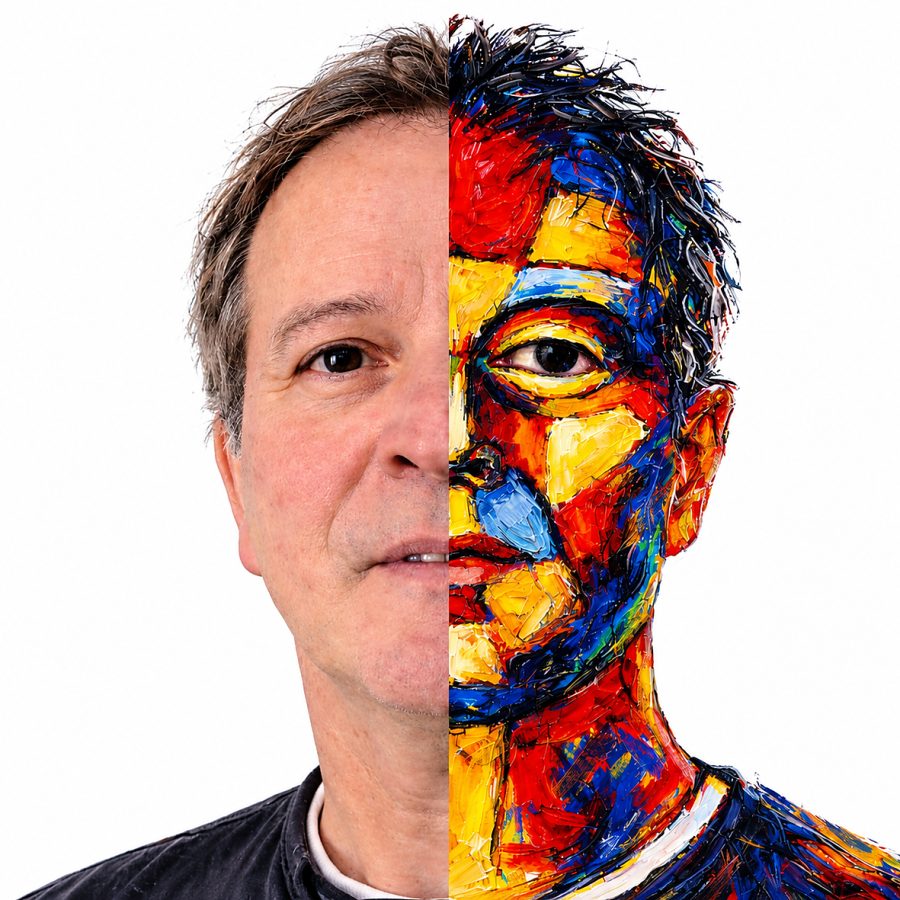
Some painters portray people. Corre-Pé paints what people carry inside. A Portuguese contemporary artist with a studio in Alhos Vedros, Corre-Pé grew up with painting close at hand from a very early age. In 2000 he decided to take it seriously, and he has never stopped questioning, researching and refining his own visual language since. Today he describes his work as Contemporary Social Art, a practice that looks at identity, collective behaviour, human relationships and what it means to be human. The human figure is at the heart of everything he does. Corre-Pé distorts it, multiplies it and wraps it in expressive lines and bold primary colours, the red, blue and yellow that have become his signature. From old taverns to fado, from the shared table to the big questions of the human condition, his canvases turn scenes of Portuguese everyday life into symbolic images full of energy, humour and unease. His process is as unique as the result. Before the paint, there are always words. Notes, memories, conversations and observations that later take shape directly on the canvas, almost without sketches, leaving room for intuition and the unexpected. His path speaks to the strength of this language. In 2026 he was recognised by The Christie’s Owners Collection and selected as a finalist for the Premio Brera in Milan with Transformation, a work inspired by Kafka’s The Metamorphosis. He was also a finalist at the III Concurso de Pintura Ciudad de Martos (2025), received an Honourable Mention at the Dama de Oro Prize (2024) and the Revelation Award at Exporádico in Alhos Vedros (2016). He has held solo exhibitions at the Museu Nacional Ferroviário, the Galeria Municipal de São Brás de Alportel, Galeria Geraldes da Silva and the Núcleo Museológico de Favaios, and has taken part in group shows in Portugal and abroad, from Lisbon to Miami. His works are held in private collections in Portugal, Switzerland and North America.